For a custom light, choose the glass by the effect you want and the way the part will be made. Confirm the technique and review a physical sample before approving repeated pieces.
The technique shapes the result.
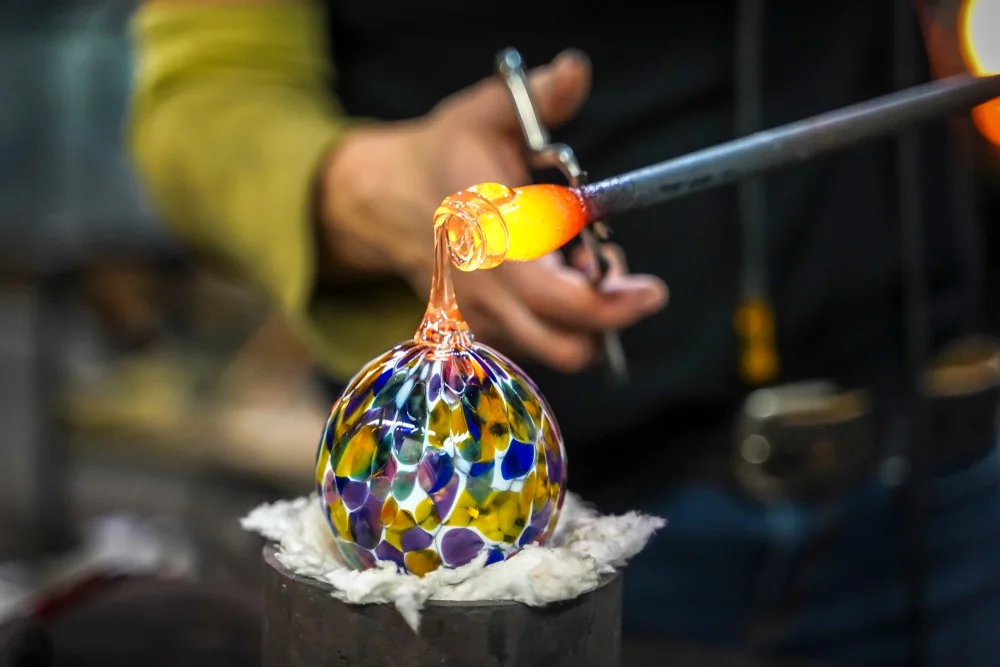
Glass blowing forms hot glass by inflating it with a blowpipe. The form can be developed freely or with a mould. Other glass processes create different kinds of pieces, so “glass lighting” does not identify one manufacturing method.
Ask which process is proposed for your fixture and what it means for its form, texture and repeatability. A textured panel and a blown pendant should be discussed through their own samples and construction details.
Look at the surface and the light.
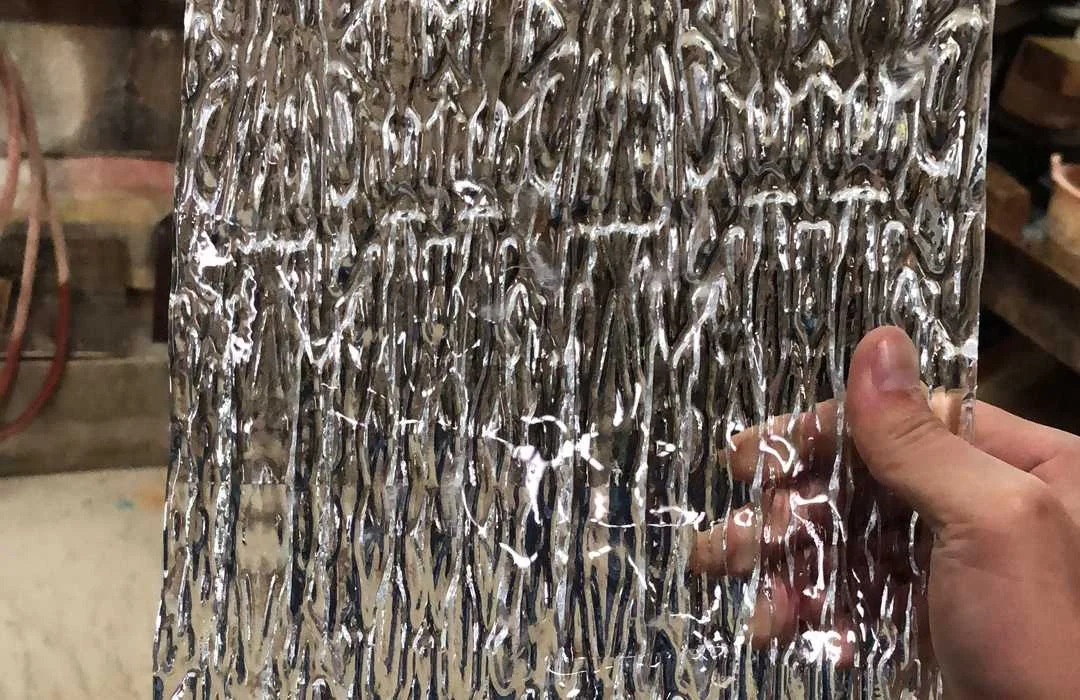
Clear, coloured, translucent and textured pieces change how the light source is seen. Review the glass with the intended source as well as under the room’s normal ambient light.
For handmade pieces, agree the variation that is part of the approved design. A sample can establish the colour and surface; a representative component or mock-up can address a more complex arrangement.
Make the sample specific.
- Colour, transparency, texture and the appearance when illuminated
- Nominal size, shape and the accepted variation
- Edges, holes, visible fixings and supporting connections
- The number of repeated elements and any spare or replacement pieces
- Packing, handling and the information needed for assembly
Keep the approved sample reference with the drawing revision and agreed production specification. The scope and cost of samples or prototypes are confirmed for the individual project.
Textured glass in a complete fixture.
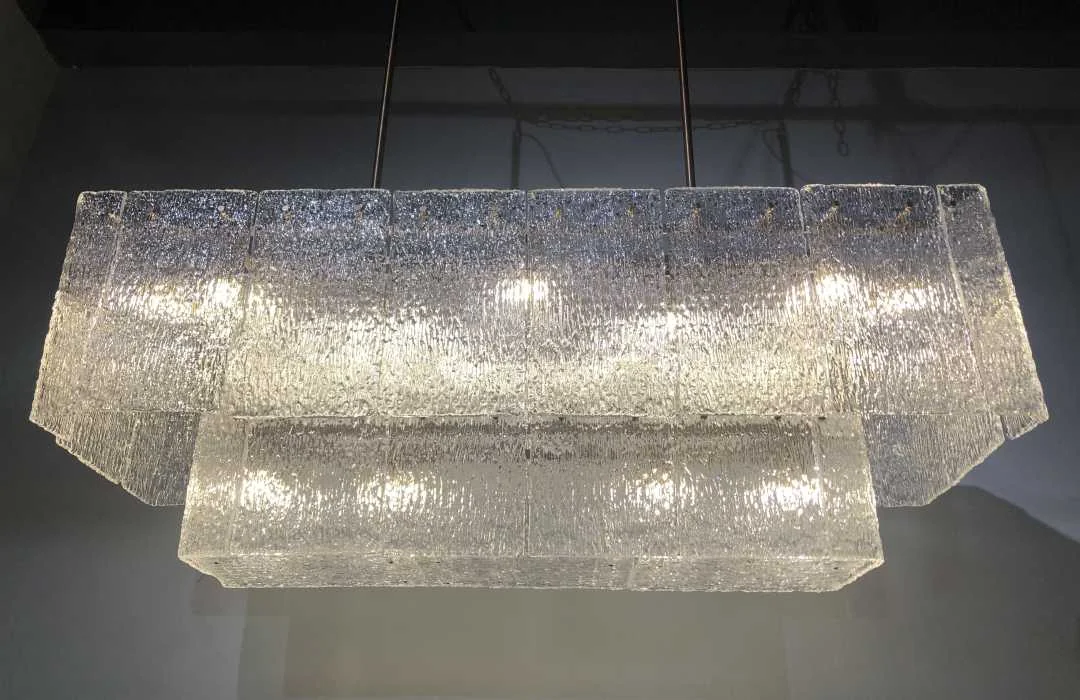
The Bangkok residence pendant offers a useful example of the relationship between a glass surface, the support frame and the lit effect. Its project photographs include a material inspection view and the fixing details.
Explore the Bangkok glass pendant →